Science first
Every product starts as research. We build on solid scientific ground: the peer-reviewed record, and the findings we publish ourselves. The science leads, the product follows.

Nanu Cognitive Performance Labs is a research lab and company builder: we incubate science-backed products and spin out new companies, all built where machine intelligence and human reasoning combine. AI at the service of humans, never the other way around.
01The thesis
Every product starts as research. We build on solid scientific ground: the peer-reviewed record, and the findings we publish ourselves. The science leads, the product follows.
Never the other way around. We build at the intersection of artificial and human cognition, so the person using the tool ends the day sharper, more capable, and more in command of their own work.
A product is right when clients pay for it, return to it, and build on it. Our spin-outs grow on user validation and revenue.
02Spin-outs
Lexmetra, Verithink, and Hasha all stem from the same pursuit: measure what matters, then continuously improve it. Improving the output of a translation, raising the quality of thinking, or developing the skills that carry a leader. Three independent companies, born in the same lab.
Work better.
Legal translation quality
Lexmetra measures the quality of legal translations and fixes them, built for the volume and the stakes of legal language at enterprise scale.
Think better.
Critical thinking
Verithink evaluates the quality of reasoning itself: where an argument holds, where it breaks, and how to strengthen it, down to the quality of the sources and empirical data behind every claim.
Be better.
Leadership skills development
Hasha develops the human side of performance: leadership grounded in active listening, collaboration, creativity, adaptability, and flexibility.
03Research
Research here flows in both directions. The science comes first: we review the literature and build every product on that foundation. And the products give back: their use in the real world generates data that pushes the knowledge frontier forward.
If you are a scientist who believes AI is a force that can help humans be better, think better, and live better, we should talk. There are many research streams here, and room to collaborate on them.
Collaborate with usThe lab works where language, cognition and performance meet. If your research lives in one of these fields, the door is open.
Language, modelled: the substrate of everything we build.
How feedback becomes skill, and how dialogue with AI builds cognition rather than offloading it.
How translation quality is defined, measured, and assured.
The cognitive processes of the multilingual mind, and how they shape translation and learning.
Why we still fall for the old thinking traps: fallacies, biases, and the steps reasoning actually takes.
The anatomy of a good argument, and how machines find and weigh arguments in the wild.
What actually moves engagement, trust, and performance at work.
What happens in the mind, and in the brain, while we read.
Paper
Adaptability and flexibility are consistently identified as critical competencies for effective teamwork, yet measuring them in practice remains a significant challenge. This article introduces a six-dimension model for classifying conversational behaviors that signal team adaptability, grounded in peer-reviewed research in organizational behavior and work psychology, and informed by the author's prior work on modeling conversational behaviors in instructional dialogue. The model identifies observable verbal indicators across six dimensions: Problem-Solving & Strategy Adjustment, Flexibility in Roles & Responsibilities, Resource & Time Management, Emotional & Stress Management, Anticipation & Contingency Planning, and Reevaluation & Reframing. Each dimension is mapped to established theoretical frameworks, including Burke et al.'s (2006) four-phase model of adaptive team performance, Marks et al.'s (2001) temporally based taxonomy of team processes, and Pulakos et al.'s (2000) eight-dimension taxonomy of adaptive performance. The framework offers a practical, research-grounded approach for observing and assessing team adaptability as it occurs in the flow of workplace meetings.
04Team
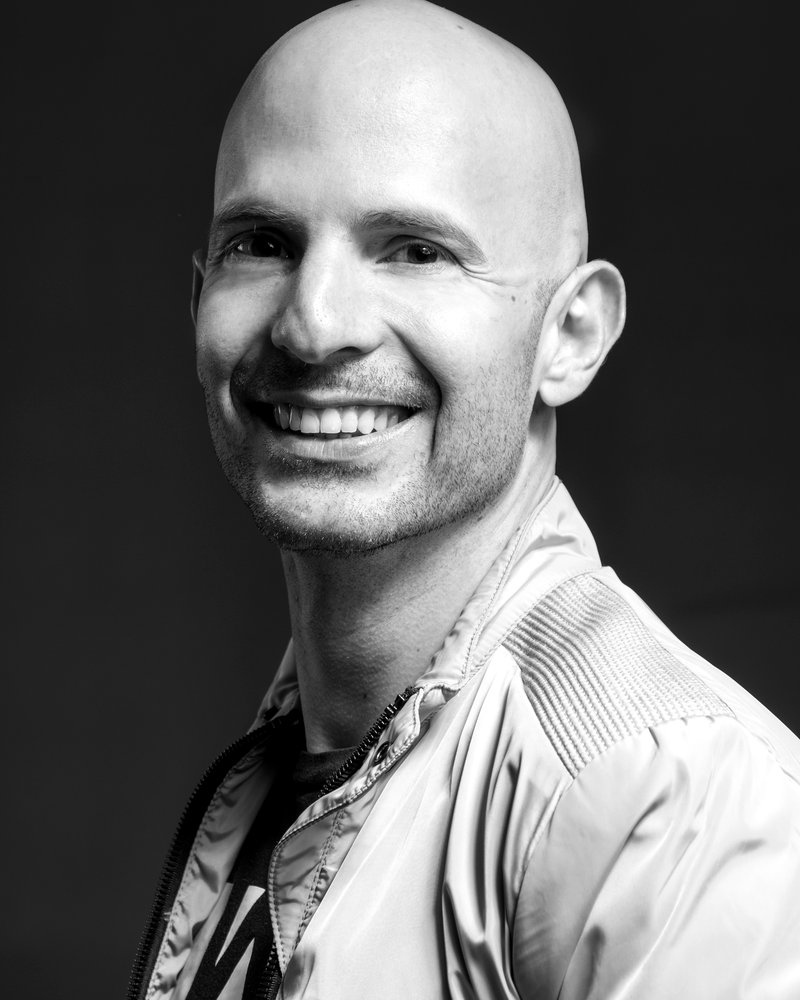
Nanu is founded and led by Dr. Jorge del Bosque: researcher, inventor, and five-time entrepreneur in B2B software.
Over fifteen years he has built and scaled SaaS platforms for Fortune 100 clients including AT&T and AIG: learning management systems early on, leadership development and legal translation today. He is the inventor of Hasha's patent-pending AI leadership software and advises large UK and US enterprises on the adoption of AI.
He completed his PhD in Conversational AI at Queen Mary University of London (QMUL) at the end of 2022, has published peer-reviewed research at conferences including ReInAct and SemDial, holds an MSc in Organisational Innovation from Queen Mary Business School and a seat on its Global Advisory Board, and is an invited speaker at AI conferences including the Generative AI Summit London.
He raised £240k in angel funding for Nanu's first spin-out. Off the clock, he is a triathlete, and has raced four times at the World Triathlon Championships.

Scientific advisor
Associate Professor in Human-Computer Interaction at Swansea University. Researcher and lecturer in computational linguistics and dialogue systems, collaborating with institutions worldwide on spoken dialogue in robotics, healthcare, and education.
Scientific advisor
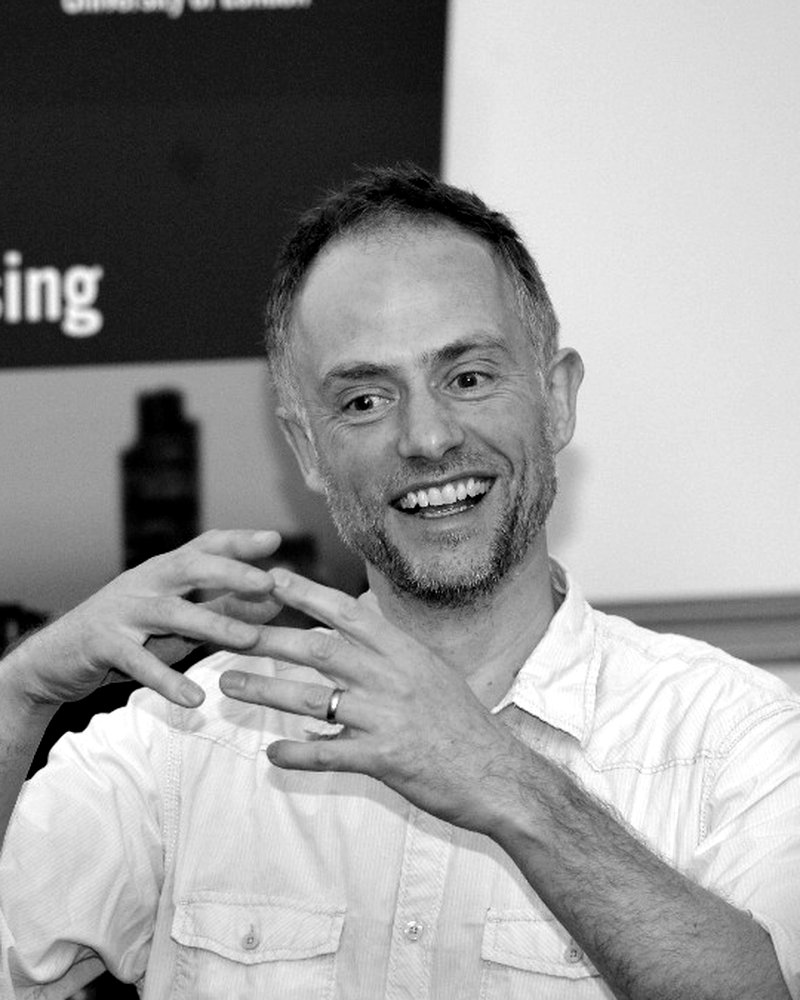
Professor in Natural Language Processing at Queen Mary University of London and the Jožef Stefan Institute, and joint leader of QMUL's Computational Linguistics Lab. Research across computational linguistics and human and machine interaction.

NLP research advisor
MSc in Artificial Intelligence and Adaptive Systems (University of Sussex), BEng in Computer Engineering (Pune University).

AI software engineering advisor
MSc in Artificial Intelligence (University of Aberdeen), BEng in Computer Engineering (Pune University).

Technology advisor
Engineering leader in consumer software: Engineering Manager (iOS) at Lapse, previously Senior Engineering Manager at Depop. Advises on product engineering and mobile.
05Partners



06Investors
Possibly sooner. Sign up to be the first to know when it opens.